
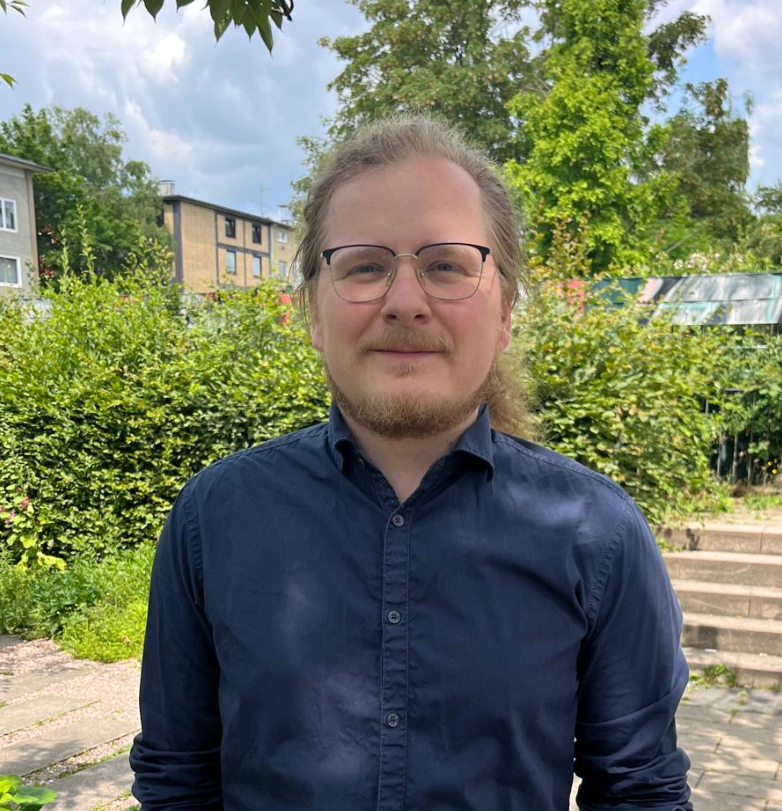
Dr. Mathis J. Gronau is a research assistant at the Institut für Soziale Bewegungen in Bochum, working for the DFG-ANR project DesinEE: “Deindustrialization in France and Germany. Experiences and Emotions from the 1960s Until Today. The Unmaking of the Working Class?” His research interests include the History of experience, comparative Western European History, the History of emotions, deindustrialization, and migration history. In 2018, he completed his master’s degree at University College London with distinction and, in 2022, obtained his PhD in European History. His doctoral research, supervised by Mark Hewitson and James Connolly, focused on the experiences of the German minority in Britain and France between 1914 and 1924. It was published in 2025 by De Gruyter under the title: “Deutsche Minderheiten in Frankreich und Großbritannien: Im Niemandsland der Identität zwischen 1914 und 1924.”
He has also acquired extensive teaching experience in Germany and Great Britain, beginning as a PGTA at UCL in 2018. He has taught BA and MA courses and delivered taster sessions to school students. His teaching topics, among others, included historiography, French, British, and German History, as well as German translation and grammar. In 2022, he became a Fellow of the Higher Education Academy.
Großer Markt – Kleine Welt? Die Erfahrung von Deindustrialisierung und Globalisierung der Textilindustrie in Bellegarde-Sur-Valserine und Südlohn 1980-2000 / Big Market – Small World? The Experience of Deindustrialization and Globalization in the Textile
This project aims to understand the experience of deindustrialization and its impact on workers’ perceptions of globalization. As one of the pioneering sectors of industrialization and globalization, the textile industry has always encompassed global and local dimensions. When examining the textile industry in border regions, this transnational aspect acquires an additional layer of complexity. Due to their geographic location, border regions have maintained a unique relationship with frontiers. For example, Südlohn in Westmünsterland, Germany, and Bellegarde-sur-Valserine in Auvergne-Rhône-Alpes, France, have had (and in part still have) strong ties to their local textile industries as well as the regions across the border.
Nevertheless, both towns were affected by deindustrialization in the latter half of the twentieth century. In this context, the period from 1980 to 2000 is particularly significant for studying these developments. Pivotal and often positively perceived globalizing events, such as the Schengen Agreement and the dissolution of the USSR, coincided with the offshoring of mills and textile factories in Western Europe. As a result, border towns directly experienced both the advantages and disadvantages of an increasingly interconnected world.
How did border towns in Germany and France experience the interplay between globalization and deindustrialization in the textile industry? What emotions accompanied these experiences, and how are they interrelated? Through oral history, experience history, and the history of emotions, this project seeks to gain a deeper understanding of those affected and contribute to a broader comprehension of deindustrialization and its influence on perceptions of global developments.
This research is part of the DfG-ANR project “Deindustrialisierung in Frankreich und Deutschland. Erfahrungen und Emotionen von den 1960er Jahren bis heute. The Unmaking of the Working Class?” led by Prof. Dr. Stefan Berger (Bochum), Prof. Dr. Emmanuel Droit (Strasbourg), and Prof. Dr. Fabian Lemmes (Saarbrücken).
Website: https://www.isb.ruhr-uni-bochum.de/mitarbeiter/Gronau.html.de