
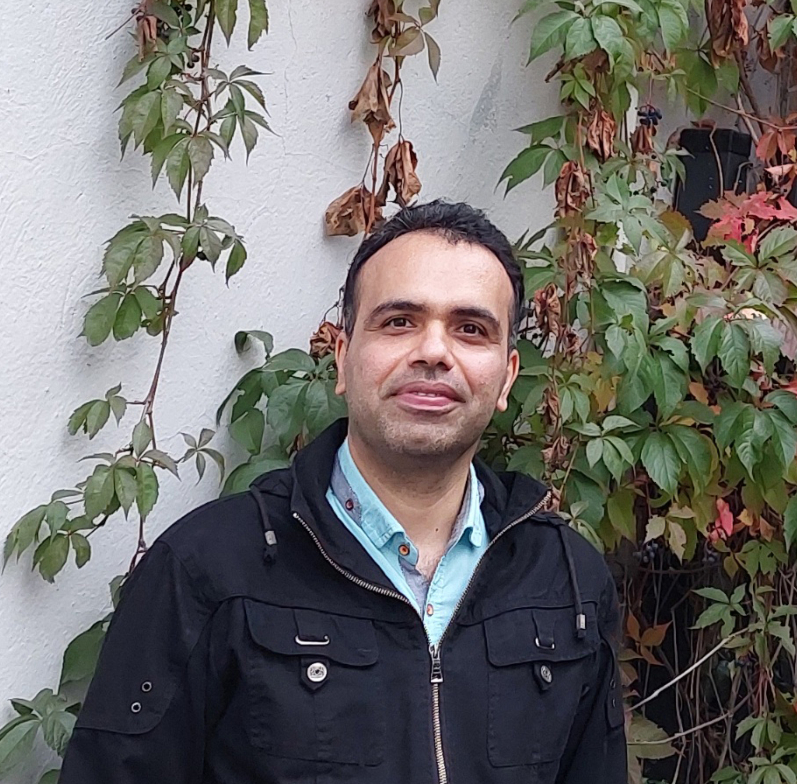
Mohammadhossein Dehghan Pour Farashah received his M.A. in Conservation and Restoration of Urban Heritage from the University of Tehran, Iran, in 2016. He also worked as a collaborator at the Cultural Heritage, Handicrafts, and Tourism Organization of Iran, preparing nomination dossiers for Persian Qanat and the Historic City of Yazd for its inscription in the UNESCO World Heritage List in 2015 and 2016. Furthermore, he was fortunate enough to serve as a lecturer at some universities and institutes in the fields of tourism, architecture, urbanism, and conservation in Iran from 2016 to 2021. Since October 2021, he has been a PhD student at the University of Lodz in the discipline of Socio-economic geography and spatial management and a lecturer at the Faculty of Geographical Sciences, Institute of the Built Environment and Spatial Policy. His main research interests include cultural tourism, industrial heritage, adaptive reuse, urban regeneration, and World Heritage Sites.
Urban space regeneration of industrial heritage cities – the comparative study of textile manufacturing in Lodz and Yazd
Today, the industrial heritage buildings have undergone changes and transformations that are practically in the direction of destruction and demolition and the spaces that should be considered as valuable spaces full of liveliness and vitality in the city have become a symbol of urban disorder. Industrial heritage spaces include not only physical issues, but also economic, social and cultural issues. As a part of the cultural heritage in Yazd and Lodz, the textile manufacturing heritage is not only a valuable heritage in terms of architecture and history, but it is also a symbol of the transformation that has come to the fore in the 20th century. Also, inclusion in the category of industrial architecture has a double value which causes a lot of thought for these buildings. Hence, the purpose of this project is first to identify the values of textile heritage sites in Lodz and Yazd. Second, to identify what new functions were introduced in manufacturing heritage sites and what the consequences were for the built environment. Third, to find out the role of post-industrial functions in the urban space organization of Yazd and Lodz. The outcomes of this project include scholarly publications, participation in international conferences, and collaborative partnerships with experts worldwide.
This project is meticulously crafted with a global perspective, aimed at ensuring that its ground breaking findings resonate across borders and disciplines. Through meticulous research and analysis, I intend to produce high-impact, peer-reviewed scientific publications that adhere to an open access policy, thereby democratizing access to our discoveries and fostering innovation worldwide. Furthermore, my project is strategically positioned to forge meaningful partnerships with esteemed foreign research institutions. These collaborations will not only enrich my research endeavors by bringing together complementary expertise and resources but also foster a dynamic environment for cross-cultural learning and knowledge exchange.
Website: https://www.uni.lodz.pl/en/employee/mohammadhossein-dehghan-pour-farashah