Dr. Melissa Meade is as an assistant professor of Communication Technologies at Seton Hall University. Her research encompasses digital media; transmedia storytelling; technology and culture; social memory; deindustrialization; identity; labor, work and cultural production; and environmental communication. Her work appears in prominent publications including Cultural Studies, Discourse & Communication, and Media, War, and Conflict as well as scholarly volumes.
Both my grandfathers started working in Pennsylvania’s anthracite coal mines as children. They were “breaker boys” or kids who sorted coal from slate in massive processing plants called coal breakers, breathing black dust for ten or more hours a day. They grew up to spend most of their lives underground in the United States’ northeastern Appalachian Mountains, mining anthracite coal in the hardest, most dangerous conditions imaginable.
When I visit the Pennsylvania Anthracite Coal Miners Memorial in my mother’s hometown of Shenandoah, Pennsylvania, a monument built to honor men like my grandfathers, I notice something unsettling. The largest, most prominent names carved in bronze aren’t miners at all. They’re coal company owners. Some of the companies are still operating strip mines in the region today.
This isn’t just ironic, but a lesson in how memory works and who controls it.
A Landscape That Remembers
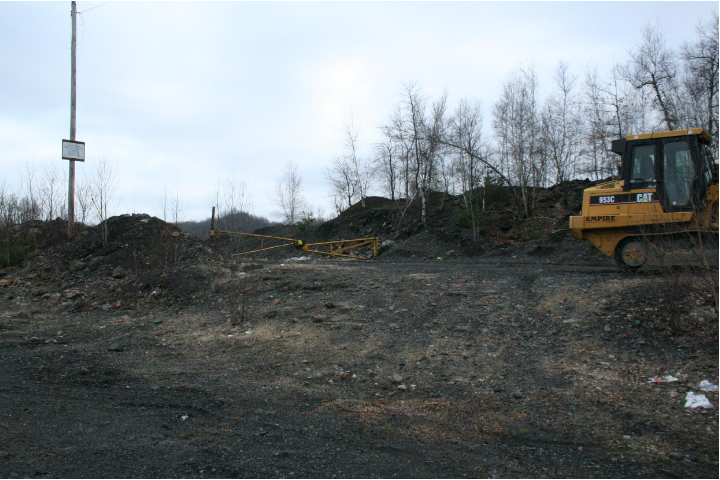
Driving through Shenandoah today, the town’s history hits you immediately. Immense black hills of coal waste called “culm piles” as they are called local language, loom over everything. Row after row of houses sit empty and storefronts are boarded up. The population that once exceeded 30,000 (making it the most densely populated square mile in the United States) has collapsed to just 4,300.
The landscape itself is a memorial to extraction. Strip mining literally moved mountains here, ripping up the earth with dynamite and bulldozers, leaving rolling hills of refuse where almost nothing grows. The coal companies took what they wanted and left behind the wreckage – environmental, economic, and human.
My mother grew up here and she remembers a bustling mining town, dense with life and industry. My grandfathers breathed coal dust from childhood until it filled their lungs. They lived through mine accidents, labor conflicts, and the injuries sustained by the slow suffocation of black lung disease. These are the actual experiences of working people, the lived reality of coal mining or what scholars call “vernacular memory.”
But that’s not the story the memorial tells.
Two Kinds of Memory
My recent book chapter, “Memories of Labor: The Anthracite Coal Miners’ Memorial Amid Landscapes of Deindustrialization,” examines how public memorials create “official memory” which is a version of the past shaped by institutions, companies, and community leaders. This official memory often clashes with vernacular memory, the messy, complicated stories of everyday people.
Official memory tends to celebrate by emphasizing sacrifice, hard work, and progress. It smooths over violence, exploitation, and structural inequality of workers and communities in favor of industrial progress and profit. It tells us to admire rather than to question.
Vernacular memory is grittier and more sobering. It remembers the ten-year-old breaker boys with mangled fingers, the miners who died in cave-ins or explosions, the families living in company-owned “patch towns” where even the police worked for the coal operators and the workers were paid not in US dollars but in coal company currency called “scrip.” It remembers the strikes that were violently crushed and the slow economic abandonment that left entire communities in poverty.
The Pennsylvania Anthracite Miners Memorial captures this tension perfectly because it is caught between honoring workers and celebrating the industry that exploited them.
What the Memorial Shows (and Hides)
Dedicated in 1996 as the last generation of active miners was dying off, the memorial features three large bronze relief panels. They show miners working underground, exiting a coal shaft with their tools, and a panoramic view of Shenandoah at the turn of the century with row homes, women carrying buckets, and a church on a hill.
The imagery is romantic, even heroic.
Flanking these panels are bronze plaques with poetry by local journalist Roseann Hall. One poem, titled “A Miner’s Prayer,” reads:
Lead me to the light of another day,
Safely to my family O God I pray.
Keep me strong so that I can provide,
For the needs of my family, my joy, my pride.
Another inscription invites visitors to walk the memorial’s brick pathway and “become part of the miners’ world,” telling us: “Do not shed tears for them—but carry on the pride they chiseled with the sweat from their brows.”
The language emphasizes pride, strength, hope, and family devotion. It frames mining as virtuous work difficult, yes, but ultimately noble. What it doesn’t mention:
Black lung disease that slowly suffocated miners, filling their lungs with coal dust
Child labor that put boys as young as eight or ten in coal breakers and mine shafts
Extreme poverty that forced entire families into company-owned housing and to shop at company stores with inflated prices
Labor violence including the 1897 Lattimer Massacre where a sheriff and coal company-backed posse killed 19 striking Slavic miners
Environmental devastation that poisoned water, caused mine fires (one mine fire threatened Shenandoah in 1965), and created ground subsidence that swallowed homes
Economic abandonment when companies shifted to strip mining, eliminating jobs while continuing to profit
The memorial sits on land reclaimed from a mine fire. It’s located near where major ground subsidence occurred from underground mine collapse. The environmental and economic consequences of coal mining literally surround the monument, but the monument itself says nothing about them.
Names in Bronze, Names on Bricks
The memorial’s politics become most visible in the hierarchy of names. The most prominent bronze plaque features an epitaph to the Blaschak family: “In loving memory of all those members of the Blaschak family who devoted their lives to the anthracite mining industry.”
The Blaschaks owned a coal company. They still do. They were, and are, operators, not miners.
Below that, other coal company names appear: Reading Anthracite, Pagnotti Coal Company, Bobby Burns Coal Company. These companies are featured on prominent bronze plaques alongside memorial committee leaders and major donors.
And the miners themselves? Their names appear on bricks on the ground; in the pavement you walk on.
To have a miner’s name included on these bricks, a family member or loved one had to donate $100. To have your name on the prominent bronze plaques as a major donor or sponsor required $500 or more. The memorial’s total cost was $250,000 and the largest contributors received the most prominent displays.
The physical arrangement is a metaphor for the power dynamics of the coal industry itself: owners elevated, workers underfoot.
A Smaller Memorial Tells a Different Story
At the southwest corner of the memorial complex sits something more authentic. There is a simple tombstone-style marker, maybe three feet tall.
At the top, there’s an etching of a coal breaker which is the massive processing plant where coal was sorted and where many miners, disabled by injury or black lung, ended their working lives.
Surrounding the breaker are culm piles, those omnipresent black hills.
Below the image, a single line: “God bless the miners and their families now and forever.”
That’s it. There are no poetry and no abstractions about pride and strength. There are no company names. Just a blessing for the miners and the families who endured alongside them.
The coal breaker image is particularly resonant. Miners often started as breaker boys in the coal breaker at age eight or ten, graduated to underground work as young men, and if they survived but were disabled by injury or disease, returned to the breaker to finish out their days in the dust-filled air where they’d begun. As the miners used to say: “Twice a boy and once a man is a poor miner’s lot.”
This modest tombstone marker, which lists no artist and no sponsors, feels more like genuine commemoration than the larger monument with its bronze panels and prominent company names.
It’s vernacular memory asserting itself, quietly and humbly.
Why This Matters Now
You might think this is just about history, about events from 75 years to a century ago, but it’s not.
Today, 99.3% of students in the Shenandoah Valley School District located in the town of
Shenandoah, Pennsylvania are classified as economically disadvantaged. The schools had been targeted for improvement under federal programs because of persistent academic challenges. These challenges are inseparable from the economic devastation that began when the coal companies shifted to mechanized strip mining, eliminated most jobs, and left the region to deal with the environmental and social wreckage.
The coal companies prominently featured on the memorial continue to operate strip mines in the region and the extraction continues. The profits continue and the environmental damage continues, but many jobs are gone.
The memorial, with its emphasis on pride and sacrifice, asks us to admire the miners without questioning the system that exploited them. It asks us to honor their work without examining who profited from it, who still profits from it, and who was left behind when profit could be made more efficiently with machines instead of men.
What to Look for in Your Own Town
This isn’t just a Pennsylvania story. Across the United States and around the world public memorials and monuments shape what we remember and what we forget about in labor, industry, and in the cost of economic “progress.”
The next time you pass a memorial or monument, ask yourself:
• Whose names are most prominent? Workers, or the people who employed them?
• What language is used? Does the language emphasize sacrifice and virtue, or does it acknowledge exploitation and harm?
• What’s missing from the story? Labor conflicts? Environmental damage? Economic consequences?
• Who paid for the memorial? Community members? Workers’ organizations? Or the companies themselves?
• Where is the memorial located? In a carefully manicured, bounded space separated from the landscape or integrated into the community that lived the history?
Memorials aren’t neutral. Rather they’re arguments carved in stone and bronze. They tell us what to remember, what to feel, and whose version of history to accept.
In places like Shenandoah, Pennsylvania the physical landscape tells a story of extraction, exploitation, and abandonment. The official memorial tells another story; one of pride, progress, and noble sacrifice. The tension between these stories is the tension between vernacular and official memory, between the lived experience of working people and the narratives that institutions want us to believe.
A Final Thought
My grandfathers were proud of their work. They did provide for their families under impossible circumstances. Their labor did help fuel America’s Industrial Revolution. All of that is true.
But they also deserved safer working conditions, fair wages, and the right to organize without violence. They deserved an environment not poisoned by unregulated extraction. They and their descendants deserved an economy that didn’t collapse the moment their labor became less profitable than machines.
They deserved to have their names in bronze, instead of names of the companies that profited from their difficult lives.
When I stand at the Pennsylvania Anthracite Coal Miners Memorial, I think about what my grandfathers would have wanted. Not romantic poetry about pride and darkness. Not their names on bricks in the pavement. And certainly not the coal companies featured more prominently than the miners themselves.
I think they would have wanted the fidelity to the lived experience of the miners rather than a memory so tidy and manicured that it erases what mattered about their lives and their struggles.
Memory isn’t neutral. And every time we let official narratives overwrite the lived experiences of working people, we lose something essential about who we are and how we got here.
The culm piles still loom over Shenandoah. The landscape still remembers. Maybe it’s time our memorials did too.
Thid blog post is based on my chapter, Melissa R. Meade, “Memories of Labor: The Anthracite Coal Miners’ Memorial Amid Landscapes of Deindustrialization” in the edited volume (Nina Gjoçi)”Amending Our Pasts and Futures: Observing Media and Place as Means to Memory” (Lexington Books, 2025).