
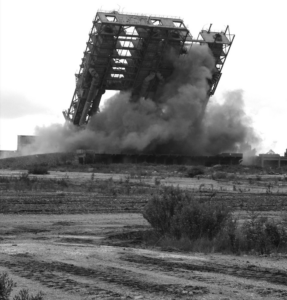
Abstract: This article analyzes the transformations over the last century of a strategic urban space in the city of Naples, the so-called Bagnoli landfill (colmata), retracing its evolution from a space for iron and steel industrial production to an example of a “hybrid void.” Drawing on a literature review of industrial decline and its socio-spatial consequences, the contribution reconstructs the evolution of this coastal area, built in the 1960s for productive purposes, subsequently abandoned, and today at the center of controversial regeneration projects. The analysis highlights how the landfill represents an emblematic node of the tensions between industrial memory, environmental remediation needs, and new strategies of urban extractivism. In particular, the work sheds light on the risks connected to current transformations, highlighting how mega-events and tourism-driven development logics can act as legitimizing devices for interventions oriented toward the capitalization of natural resources. Within this framework, the permanence of the landfill and the coastal infrastructural projects appear to clash with the principles of environmental protection and the return of spaces to the community that have emerged over recent decades.
Introduction
For roughly half a century, an extensive body of scholarship has examined the implications of deindustrialization processes that, beginning in the 1970s, affected most Western economies (Garruccio, 2016; Zazzara, 2021). The significant decline in the contribution of industrial production to the GDP of numerous European countries and large areas of the United States, together with the dismantling and relocation of industrial plants to other global macro‑regions, has produced far‑reaching economic and social consequences. Among these are profound impacts on local populations, including displacement, identity crises, and the invisibilization of specific social groups – most notably the working class, understood in its characteristic nineteenth and twentieth‑century contours (Newman, 1985; Byrne, 1995; Modell-Brodsky, 1998).
Yet one of the most evident outcomes of deindustrialization concerns the deep transformations of the contemporary city. A central issue in this regard is the emergence of numerous so‑called urban voids and abandoned spaces within former industrial areas. British scholarship first attempted to define these “voids,” developing the concepts of derelict land and vacant land (Dansero, 1993): the former refers to ex‑industrial sites requiring remediation before they can be repurposed, while the latter designates large public areas that are underused or unused (Frallicciardi-D’Anna, 2015, pp. 23-44).
In Italy, a systematic analysis of the relationship between industrial abandonment and urban voids dates to the early 1990s, when more refined research began to identify the specificities of the phenomenon compared to earlier studies modeled primarily on British and French cases (Dansero, 1993, p.31). More recent work – such as that of Emanuele Garda (2016) – has focused on the causes of abandonment and, in particular, on the shifting conditions that lead places to be deserted, linking these dynamics to post‑industrial economic transformations.
Building on these premises, the aim of this article is to examine the historical evolution of what may be defined as a hybrid void: the so‑called Bagnoli colmata. This urban space, created in the mid‑1960s, was initially characterized by a precise industrial function, later abandoned, and today stands at the center of intense debate due to the contested regeneration plans for the National Interest Site (SIN) in which it is located.
The Denied Sea and the Bagnoli Colmata
The Bagnoli-Coroglio industrial complex was established along the western coastline of Naples beginning in 1905, with the founding of the local Ilva steelworks. Over the following decades, the area expanded to include four major plants, becoming the principal industrial hub of Southern Italy: alongside the steelworks – later renamed Italsider – arose the Cementir cement factory, the Eternit asbestos‑manufacturing plant, and the Federconsorzi chemical industry. Despite its evident contradictions – summarizable in the century‑long tension between industrial development, social and labor emancipation, and the severe compromise of both human health and the surrounding environment – the complex constituted a fundamental component of Italy’s state‑driven capitalism and national economic growth.
Nevertheless, due to a complex interplay of factors – including global economic transformations, the international relocation of steel production to developing regions, and the inability of Italian political elites to plan a sustainable territorial transition – the Italsider plants, the driving force of the entire complex, were sold off in the early 1990s. This triggered a profound crisis that soon became not only economic, but also political, social, and urban (Belli-Andriello-Lepore, 1991; Di Dato, 2016; Cristoforoni, 2016).
A recurring element in the history of the Bagnoli industrial area was the constant need for expansion, justified by the necessity to compete with international rivals benefiting from more advantageous economies of scale. The most significant enlargement occurred between 1962 and 1965, when various interventions culminated in the construction of the so‑called colmata a mare: a twenty‑two‑hectare platform made of concrete and industrial waste, used by Italsider for the storage of incoming and outgoing materials transported by sea.
Its construction was an extremely invasive process that radically altered the coastal landscape and reshaped the relationship between the factory and the territory. As former steelworker and local resident Mimmo Troia recalls: «I remember clearly when my family and I had to leave our home to make way for the industrial facilities… watching them replace the sea with concrete… we knew it was something unnatural»[1]. His testimony evokes broader theories of extractivism – an economic model rooted in colonial modernity and perpetuated in contemporary global dynamics – centered on the large‑scale appropriation of natural resources for export, often accompanied by severe environmental degradation (Gudynas, 2015; Durante et al., 2021).
In the case of the Bagnoli colmata, the extractive logic did not concern the export of raw materials but rather the advancement of anthropic activities characterized by intensive exploitation of labor and the appropriation of natural resources subordinated to industrial progress. This appropriation unfolded along two main axes: first, through the physical transformation of the coastline, replacing the sea with a heavily polluted platform roughly equivalent in size to thirty football fields; second, through the deprivation of public access to the sea and beach, which became unusable due to extreme levels of contamination.
Until the mid‑1960s – despite decades of industrial presence – the Bagnoli coastline still maintained its long‑standing thermal and recreational functions, layered over two millennia of use. Factories, though harmful, had coexisted with bathing establishments and thermal‑hotel activities until the definitive industrial expansion. Legal disputes between seaside operators and Italsider began only in 1967, highlighting the growing incompatibility between industrial growth and coastal leisure activities (Caruso, 2023).
The enlargement of the steelworks and the construction of the colmata were not the sole causes of the territory’s degradation – this resulted from the overall mismanagement of the industrial era, which compromised marine sediments, surrounding soils, and air quality for decades. Yet the colmata stands as a powerful symbol of human aggression toward natural resources, even more so than the initial decision to build steel plants directly on the coast, sanctioned by a special law for the industrialization of Southern Italy in 1904 (Belli-Andriello-Lepore, 1991).
Local testimonies further illustrate the dramatic shift: «Up to a certain point, despite the presence of the factory, Bagnoli had remained a vibrant, popular seaside destination… there were restaurants, pizzerias, people would stroll along the waterfront… there was a certain sense of prosperity»[2]. The colmata thus marks the moment when industrial expansion definitively severed the historical relationship between the community and its coastline.
The Colmata After the Factory
With the closure of the industrial complex – between the mid‑1980s and 1992 – the debate over the future of the Bagnoli coastline became one of the most contentious issues in the urban transformation of Naples. In December 1994, the municipal administration led by Mayor Bassolino drafted the Western Variant to the city’s Master Plan, envisioning the environmental remediation of the area and outlining an executive plan based on several strategic interventions: a 110‑hectare public park in the Coroglio plain, connected to an additional 160 hectares of protected green space; the restoration of the shoreline between Coroglio and Bagnoli, integrated with the park; a small‑scale marina for recreational boats; a new road and rail transport network; a stock of public and private housing for approximately 4,000 residents; a congress center with around 5,000 seats; and a network of parking facilities integrated with public and private services.
The main proponent of the Variant was the urban planner and city councillor Vezio De Lucia. The plan was discussed extensively in assemblies, public forums, and meetings with committees and associations, before being definitively approved by the municipal council and the Campania Region in April 1998. The debate was complex: business groups pushed for the construction of a port, hotels, and housing, while environmentalists – aligned after years of conflict with former steelworkers – advocated for a park, a public beach, and a relatively limited amount of new building volume. As for the pleasure craft marina, the Nisida option was discarded for environmental reasons, and the 1996 version of the Master Plan deferred its location to further studies within the executive plan (De Lucia, 2018).
Restoring the natural morphology of the coastline thus became a central element in all planning instruments: the colmata a mare was to be removed, as it was incompatible with environmental regeneration strategies. In 1996, this principle was codified in national law (Law 582/96), while the Ministry of the Environment initiated legal proceedings (later stalled) to assign the costs of removal to Institute for Industrial Reconstruction (IRI) and its successor companies (Fintecna, from 2002). Despite this, many actors continued over the years to propose reusing the colmata for construction, parking, and especially port‑related purposes (Di Dato, 2016).
In 2005, Marine di Napoli (a partnership between the Chamber of Commerce and Sviluppo Italia) presented a project for a 600‑berth marina, positively evaluated by the Port Authority but not included in urban plans. Other proposals followed: a seafront terrace for the 2013 Forum of Cultures, a sports complex for golf, and recurrently, port facilities. According to leading analysts, these were less genuine proposals than strategic attempts to legitimize the colmata’s permanence as a site for future construction or port development.
The controversies surrounding the colmata’s removal are therefore not merely technical but rooted in economic and political interests. Although analyses by the dissolved Bagnoli Spa and the Central Institute for Applied Marine Research detected the presence of Polycyclic Aromatic Hydrocarbons – carcinogenic substances produced by industrial activity and filtered into the seabed – scientific advances would allow their removal with relative ease and limited cost (De Vivo et al., 2026). Indeed, a 2003 program agreement tasked the Port Authority with removing the colmata and depositing its debris in the Levante dock of the Port of Naples, at an estimated cost of €44 million. The project was never completed, and a new feasibility study (2007) proposed transferring the materials and dredged sediments to the Port of Piombino for infrastructure works. Despite a signed agreement, the “Piombino operation” also failed to materialize (Di Dato, 2016).
In May 2024, after all urban plans and the PRARU reaffirmed the necessity of removing the colmata, a government decree on cohesion policies modified Law 582/1996, eliminating the requirement to “restore the natural morphology of the coastline in accordance with the City of Naples’ planning instruments.” For the first time in sixty years, removing the Bagnoli colmata was no longer mandatory.
Deindustrialization and the Great Void
The history of the still‑unfinished deindustrialization process in the Bagnoli-Coroglio plain is long and complex. In brief, from 1992 to the present, it has unfolded through a continual shifting of responsibility between public and private actors who were expected to finance and carry out the environmental remediation; the establishment of public companies that collapsed under the weight of enormous debts; the waste of more than €900 million over thirty years for the construction of a few public works – many of which were later abandoned or vandalized; and a remediation effort so partial and inadequate that it led to criminal proceedings for environmental disaster, now approaching a third appellate trial (Di Dato, 2016, pp.46-66).
Although the implementation of urban plans and operational projects has been marked by inefficiency and incompleteness, it is important to emphasize that the planning framework itself emerged from a long and productive debate. Beginning in the mid‑1990s, this debate effectively synthesized the dialectic between environmentalist and working‑class perspectives, finding a balance between productive development and the restitution of the territory to its inhabitants, and especially between public and private interests (Dispoto-Di Gennaro, 2016). Despite the slow and ineffective implementation of remediation and regeneration, in 2014 the Renzi government placed the National Interest Site (SIN) under special administration through the controversial “Sblocca Italia” decree, removing the municipal government from its urban‑planning prerogatives (Montanari, 2014).
Nevertheless, thanks also to the persistent pressure exerted by numerous local committees and civic associations, even Invitalia’s plan – the implementing body of the PRARU (Environmental Remediation and Urban Regeneration Program) – incorporated many of the citizens’ demands: a free and accessible public beach, swimmable waters, removal of the colmata; a forested area in the inland zone; restructuring and expansion of infrastructure (roads and public transport); relocation inland of all activities situated along the waterfront; and the construction of a small marina near Nisida.
Throughout the period from the factory’s closure to 2025, the colmata represented a vast urban void for the territory – a desolate expanse gradually overtaken by vegetation, stretching roughly 700 meters along the gulf, from which two piers extended, once used for docking industrial ships. As resident Francesca Bernabei explains: « Over the years, we watched this vast expanse gradually turn green… that empty space still represented hope, but today they are taking it away by covering it with concrete»[3].
Despite its abandonment – and although access was formally prohibited – the colmata became characterized over the past two decades by a variety of informal and heterogeneous uses. For neighborhood adolescents, the Ferdi pier – extending from the colmata and hosting until recently a structure used to pump seawater into the factory – was a place for group gatherings and a platform for diving into open water. On the southern pier, fishers spent entire days contemplating the sea and horizon. Enthusiasts of model building organized amateur races with remote‑controlled cars and drone explorations, while migrant communities used the area for cricket matches and improvised picnics.
It is precisely considering this fragile balance between abandonment and informal uses – and considering the peculiarities that make the Bagnoli colmata difficult to classify within established categories of urban voids – that this article proposes defining it as a hybrid void. Such a definition is appropriate for capturing the specific characteristics that have shaped the evolution of this urban space since it ceased to serve its industrial function.
From this perspective, the notion of a hybrid void serves as an interpretive tool for understanding its complex condition, suspended between abandonment, informal use, and obstruction to regeneration. This is particularly evident when considering: the decades‑long paralysis of urban planning for the area, which produced a condition of non‑use, suspended in the vain expectation of territorial restitution; the characteristics that allow its classification both as vacant land and derelict land; and Garda’s taxonomy, which places this space in an intermediate position between abandoned places (whose desertion stems from the cessation of the functions that generated them) and consumed places (desertified by prolonged human exploitation of their resources).
Towards a New Economy of Extraction
Beginning in the spring of 2024, while the management of the remediation and urban‑regeneration process continued under the direction of Invitalia and the special commissioner – headed since 2021 by the mayor of Naples, Gaetano Manfredi – several institutional initiatives intervened to alter the orientations established by the PRARU. The first was the amendment, in May 2024, of Law 582/1996 through a government decree on cohesion policies. As previously noted, the intervention removed the requirement to “restore the natural morphology of the coastline in accordance with the City of Naples’ planning instruments”. This represented a clear reversal of decades of planning aimed at creating a coastline exclusively for bathing use, with clean waters and a long, uninterrupted public beach stretching from Nisida to Pozzuoli – an objective now undermined by the continued presence of the colmata, which was preliminarily secured through burial.
Less than two months later, a memorandum of understanding signed by Prime Minister Meloni and Mayor‑Commissioner Manfredi completed the planned funding – €1.2 billion through 2029 – for the remediation and regeneration of the SIN. Remediation works were immediately ready for implementation, and the mayor soon officially announced that the colmata would be removed only minimally, with its remaining portion converted into a seafront public plaza for bathing use.
In May 2025, however, Prime Minister Meloni announced that Naples would host the 2027 America’s Cup. The Bagnoli colmata – only 10% removed – would be fully buried by spring 2026 and designated as the logistical hub for the competition. A decree‑law (no. 96 of 30 June 2025) assigned the role of implementing body for the America’s Cup works to the government‑owned company Sport e Salute, authorized to operate in coordination with the commissioner’s structure to ensure absolute prioritization of all interventions deemed necessary for the event (to further explore the debate surrounding the contested methods through which, at the time of writing this contribution, the works for the infilling of the colmata and the dredging of the seabed are being carried out, see De Vivo et al. 2026; Lucarelli 2026.)
One of the most contentious issues arising from the decision to retain the colmata concerns its future use. Commissioner Manfredi, his deputy commissioners, and several members of the Naples municipal administration have assured that, once the competition concludes, the colmata will be designated for public and bathing use. However, leading analysts of the “Bagnoli question” note that a port‑related function has already been informally decided, exploiting the exceptional powers granted by the commissioner’s framework – whose decisions are taken without any democratic legitimacy, not only from the local community but even from the municipal council.
As legal scholar Lucarelli observes: «The Commissioner’s report refers to a sheltered basin protected by breakwaters… If a structure is built whose configuration and function effectively create a port, its temporary nature must be demonstrated, not merely asserted». The concern is that the infrastructural configuration created for the America’s Cup will effectively establish a port, regardless of official declarations of temporary use (Lucarelli, 2026)
Further critiques highlight the broader political function of major events: «What is the true function of mega-events? Essentially, it is to grant extraordinary powers to those in government… Mayor Manfredi needed this event to push through his agenda for Bagnoli… and to get rid of the opponents who are obstructing the privatization and commodification of the coastline». In this interpretation, the America’s Cup serves as a legitimizing device for dismantling the 1998 urban variant, which had designated the former Italsider area as a public park and public beach (Tozzi, 2025).
Conclusions
The evidence gathered delineates a scenario of significant concern regarding the ongoing urban transformations. According to civic associations, territorial committees, and leading urbanists, geologists, and legal scholars, the risk is that the America’s Cup has functioned not as an opportunity for shared development, but rather as a legitimizing device for a substantial revision of planning instruments previously oriented toward the restitution of territory and natural resources to the community.
The decision to maintain the Bagnoli colmata on the coastline represents a major discontinuity with respect to the orientations consolidated over recent decades. It appears to reactivate extractives dynamics reminiscent of the industrial era, through large‑scale cementification processes that constitute a new form of appropriation of this coastal urban space. Such appropriation stands in tension with the regulatory and deliberative framework developed since the 1990s, which sought to safeguard public access and the ecosystemic value of coastal areas.
The continued presence of this massive structure – composed of concrete and industrial debris – on the shoreline thus symbolizes not only the unresolved legacy of deindustrialization, but also the emergence of a new extractive paradigm, one that risks subordinating collective territorial rights to exceptional events, private interests, and emergency‑driven governance.
Bibliografia
AURELIANI T. 2025, L’estrattivismo tra violenza sistemica, dinamiche neocoloniali e danni ambientali. Prospettive teo- riche e di ricerca-azione, in Cambio. Rivista sulle trasformazioni sociali, Vol. 15, n. 29, pp. 35-51
BELLI A., ANDRIELLO V., LEPORE D. 1991, Il luogo e la fabbrica. L’impianto siderurgico di Bagnoli e l’espansione occi- dentale di Napoli, Graphotronic, Napoli.
BYRNE D. 1995, Deindustrialization and Dispossession: An Examination of Social Divisions in the Industrial City, in Sociology, n. 29.
CARUSO V. 2023, Il cantiere e la polveriera. Politiche per l’impatto ambientale nella Napoli industriale, dal 1961 al pre- sente, Università di Torino-Università degli studi di Firenze (Tesi di dottorato).
CRISTOFORONI G. 2016, Sblocca Italia, Sblocca Bagnoli. Raccolta di fatti e scritti che documentano centodieci anni di storia, Intra Moenia, Napoli.
DANSERO E. 1993, Dentro ai vuoti. Dismissione industriale e trasformazioni urbane a Torino, Cortino, Torino.
DE LUCIA V. 2018, Napoli, promemoria. Storia e futuro di un progetto per la città, Donzelli, Roma.
DE VIVO B., ALBANESE S., MANNO M., ROBERTS E. 2026, The Bagnoli-Napoli, Italy, cleanup case study: Initial site characterisation, former remediation and current cleanup plans for the brownfield site, in Journal of Geochemical Explo- ration, Vol. 284, maggio 2026.
DI DATO M. 2016, Sulla riqualificazione ambientale e urbanistica di Bagnoli, in ROSSOMANDO L. (a cura di), Lo stato della città. Napoli e la sua area metropolitana, Monitor Edizioni, Napoli.
DISPOTO G., DI GENNARO A., 2016, Bagnoli: una dis-missione possibile, in Meridiana, n. 85, Roma.
DURANTE F., KRÖGER M., LAFLEUR W. 2021, Extraction and Extractivisms: Definitions and Concepts. In SHAPIRO J., MCNEISH J.A. (a cura di), Our extractive age: expressions of violence and resistance, Routledge, Londra. FRALLICCIARDI A.M., D’ANNA M. 2015, Teoria e prassi dei “vuoti urbani”, in Territorio della ricerca su insediamenti e ambiente. Rivista internazionale di cultura urbanistica, vol.8, n.1, giugno 2015.
GARDA, E. 2016, Le molteplici forme dell’abbandono. Un’esplorazione nei territori densamente abitati, in DAL BORGO A.G., GARDA E., MARINI A. (a cura di), Sguardi tra i residui. I luoghi dell’abbandono tra rovine, utopie ed eterotopie, Milano-Udine, pp. 71-93.
GARRUCCIO R. 2016, Chiedi alla ruggine. Studi e storiografia della deindustrializzazione, in Meridiana, n. 85, Roma.
GUDYNAS E. 2015, Extractivismos. Ecología, economía y política de un modo de entender el desarrollo y la naturaleza, CEBID, Cochabamba.
LUCARELLI A. 2026, Esistono (ancora) gli intellettuali liberi, in Il Corriere del Mezzogiorno, 18 febbraio 2026. MODELL J., BRODSKY C. 1998, A Town Without Steel, Pittsburgh U.P., Pittsburgh.
MONTANARI T. (a cura di) 2014, Rottama Italia. Perché lo Sblocca Italia è una minaccia per la democrazia e il nostro futuro, Altreconomia, Milano.
NEWMAN K. 1985, Urban Anthropology and the Deindustrialization Paradigma, in Urban Anthropology and Studies of Cultural Systems and World Economic Development, n. 14, New York.
ROSA R. 2025, «In questa piazza sono il più vecchio». Storia di un ex operaio di Bagnoli, Napolimonitor.it, 18 giugno 2025 (ultima consultazione: 29 marzo 2026).
TOZZI L. 2025, L’America’s Cup fa male alla Napoli pubblica. E un classismo sempre più egemone fa festa, in Altraeco- nomia.it, 6 giugno 2025 (ultima consultazione: 29 marzo 2026).
ZAZZARA G. 2021, Il deposito deindustriale : storia e prospettive dei Deindustrialization Studies, in Imprese e storia : rivista dell’Associazione per gli studi storici sull’impresa : 44, 2, 2021a, Milano.
[1] Interview with Mimmo Troia, conducted in Naples on 12 January 2026.
[2] Interview with Arturo Di Gennaro, conducted in Naples on 9 June 2025..
[3] Interview with Francesca Bernabei, conducted in Naples on 6 March 2026.