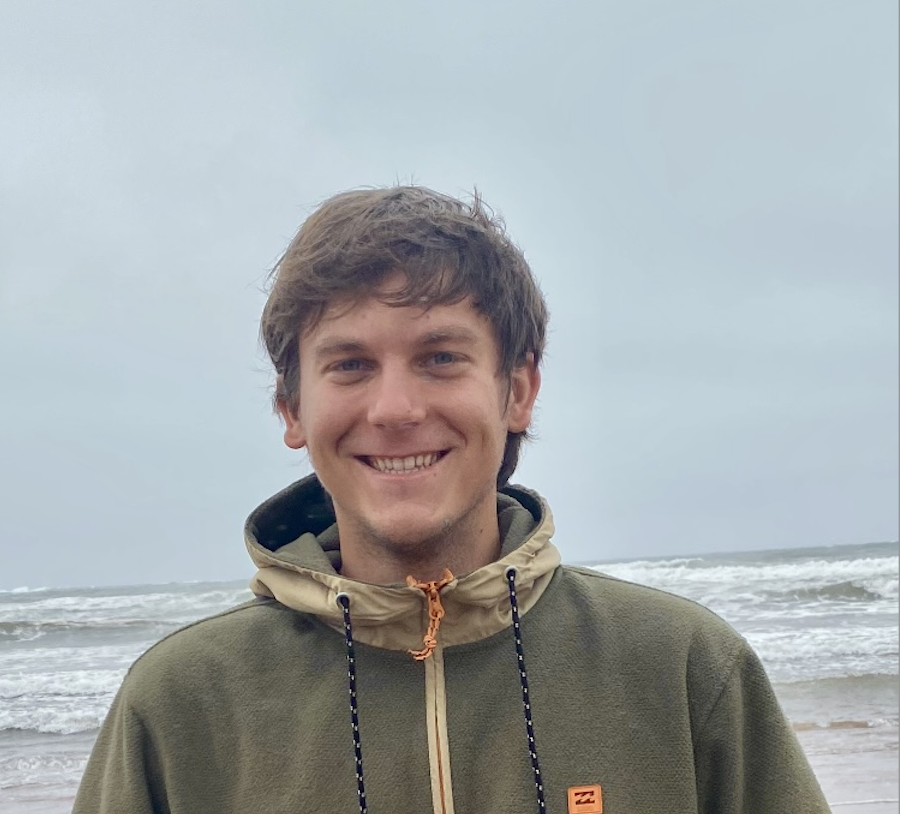
Wyatt Snikkers is a master’s student under the supervision of Dr. Fred Burrill and Dr. Peter Thompson at the University of New Brunswick. He has a degree in history from the University of New Brunswick, where I dedicated significant time to researching the working-class experience. He has also received training in oral history, having experience working with and studying living people and their experiences. Related to his research is my background working in an industrial setting. Alongside this, he has a long lineage of working-class family members who have worked in mills, logging, and fisheries for decades. These two elements are the foundation of his interest in working-class experience and the effects of neo-liberalism on Canadian industry.
Project Statement : Alberni’s Laid Off Again: Deindustrialization, Lived Experiences, and Memory in the Industrial Heart of Vancouver Island
Wyatt’s project examines labour history across several resource-based industries in Port Alberni, British Columbia, from the 1950s through the 2000s. His research is centred on the lived experiences of workers facing mill closures and declines in the availability of natural resources. Another aspect of his work analyzes the resource frontier in Port Alberni, which is atypical compared to many other examples in deindustrialization studies. The unique case in Port Alberni comprises cyclical, non-linear patterns in which the industry temporarily leaves but later returns at full capacity in some instances, only months after a mill closure. The implications of investment and divestment that created a repetitive cycle of booms and busts also led to the working class, which, in a way, was continually led on by capital. His primary source base will be rooted in oral history, drawing on interviews with former mill workers, their families, and relevant members of the broader community. His ultimate goal with this project is to give the working class in Port Alberni a voice in the historical record through their own voices. For him, this project is as personal as it is professional, and he is placing community collaboration at the forefront, where he hopes to act as a facilitator of historical discussion.